
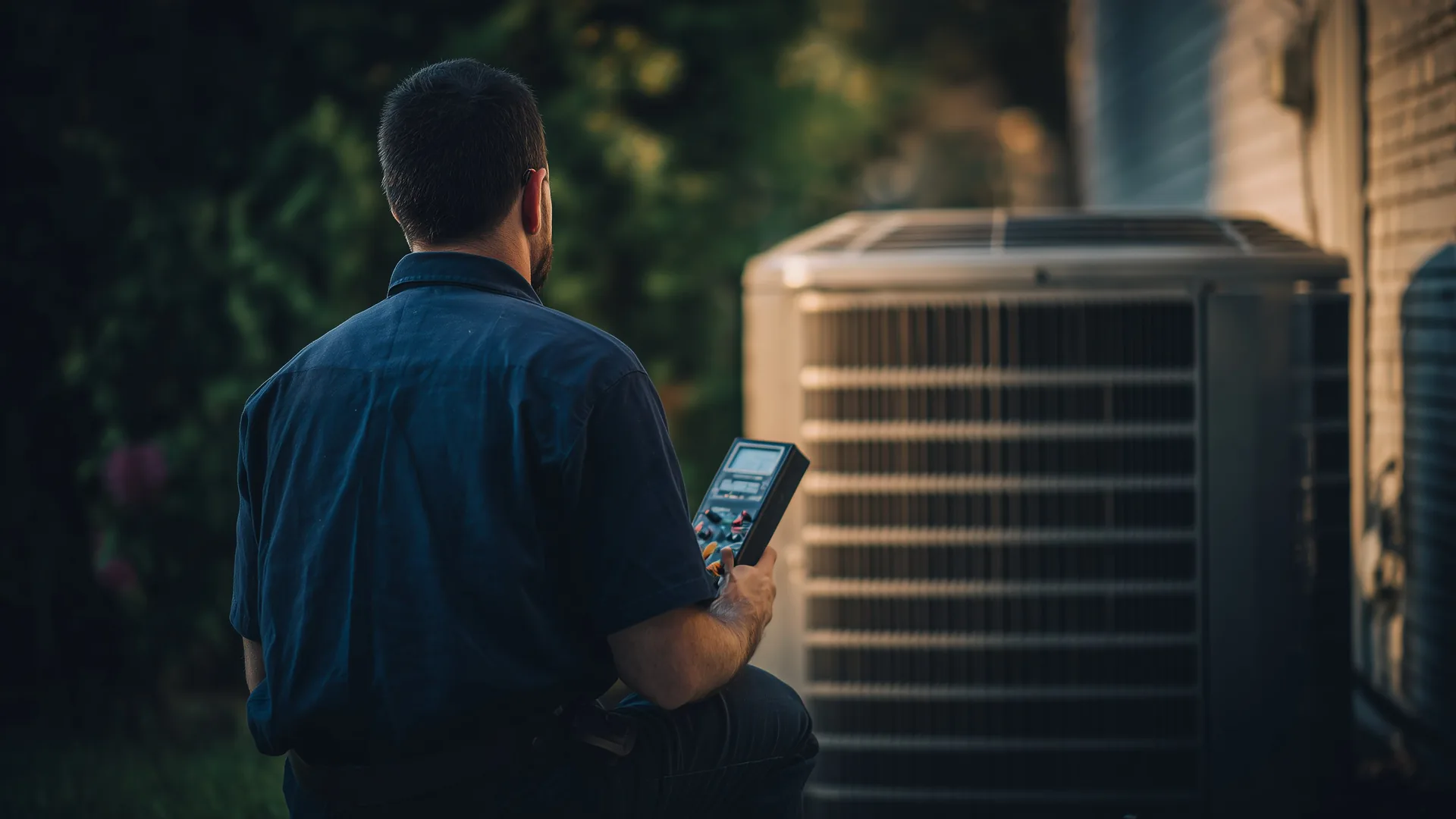
Furnace Repair in Fishers, IN
Heat back on, explained plainly. Same-day gas furnace diagnostics when a Fishers cold snap drops the lows into the single digits.
- Licensed, Bonded & Insured
- Carrier Equipment Installed
When the heat quits in a Fishers winter
From December through February, Fishers regularly sees lows in the teens and single digits, and a furnace that quits in that stretch is not a wait until morning problem. Most homes here run natural gas forced air on the CenterPoint Energy system, and when that unit stops making heat we find the real cause fast, whether it is a failed igniter, a dirty flame sensor, a stuck gas valve, a bad control board, or a blower that will not spin.
You get a same-day diagnosis when the schedule allows, a plain explanation of what failed, and a flat repair price before any wrench turns. No heat is treated as urgent, because in this climate it is.
Common Fishers furnace failures we fix
- Hot surface igniters that crack and stop lighting the burners.
- Flame sensors fouled enough that the furnace lights then shuts down after a few seconds.
- Pressure switch and condensate faults on high efficiency furnaces in newer Saxony and Britton Falls homes.
- Blower motor and capacitor failures that leave you with a unit that fires but moves no air.
- Control board and thermostat faults that mimic a dead furnace.
What a furnace repair visit covers
A technician inspects the igniter, flame sensor, gas valve, blower, and safety controls, tests the heat exchanger for cracks, and confirms safe combustion before leaving. Because the common parts ride on the truck, the heat is usually back on the same visit. If a crack or a failure makes repair the wrong call, we say so and show you the replacement path rather than patching a unit that is not safe to run.
Repair, not replace, until it is not
Most no heat calls are a part, not a new furnace. We repair what is worth repairing. When a furnace has reached the end of its life and the math no longer favors a fix, we walk you through it honestly, and you can read the equipment and rebate side on our furnace installation page rather than getting an upsell at the door.
See furnace installation in Fishers if replacement is on the table.
Furnace questions from Fishers homeowners
Can you come out the same day?
When the schedule allows, yes. A no-heat call in a Fishers winter is treated as urgent, and common furnace parts ride on the truck so most repairs finish the same visit.
My furnace lights then shuts off after a few seconds. What is that?
That pattern usually points to a dirty or failed flame sensor, though a pressure switch or control issue can mimic it. A technician confirms the exact cause before quoting.
Is it dangerous to keep running a furnace that cycles oddly?
It can be. We test the heat exchanger for cracks and confirm safe combustion, and if the unit is not safe to run we tell you rather than patching it.
Will you push me to replace instead of repair?
No. Most no-heat calls are a part, not a new furnace. We repair what is worth repairing and only raise replacement when the math genuinely favors it.
Why is my furnace not heating my home?
Common causes are a dirty filter, a thermostat problem, an ignition failure, a blower issue, or skipped maintenance. A technician can identify which and restore heat.
No heat when it's cold out is the call we take most in winter, and the causes run from trivial to serious. A filter so clogged the furnace shuts itself down on a safety limit. A thermostat with dead batteries. An igniter or flame sensor that's failed, so the burners never light. A blower that won't move the warm air even when everything else works. Start with the filter and thermostat — genuinely, check those first. If the house is still cold, get someone out before a small problem and a cold night turn into frozen pipes. We're at 317-804-4351.
Why is my furnace blowing cold air?
If the furnace runs but blows cold, check the thermostat is set to "heat" not "fan." Cold air also points to an ignition failure, a gas-supply issue, or an overheating shutdown that a technician should inspect.
A furnace blowing cold air is doing half its job — the blower's running, but there's no flame behind it. Sometimes it's nothing: a thermostat fan set to "on" pushes room-temp air between heating cycles, and that's normal. But if it's calling for heat and still blowing cold, the burners aren't lighting. That's an igniter, a flame sensor, a gas-supply problem, or a furnace that overheated and locked itself out. Set the fan to "auto" and see if it changes. If not, it needs a look — cold air in January doesn't wait.
Why does my furnace keep turning on and off?
Rapid cycling usually comes from restricted airflow, overheating, a thermostat problem, or an oversized furnace. It's hard on the equipment, so it's worth diagnosing rather than ignoring.
When your furnace fires up, runs briefly, shuts off, and repeats, that's short cycling — and it's the kind of thing that quietly wears a system out. The most common cause is airflow: a dirty filter or blocked returns make the furnace overheat, so its safety trips and cuts the burners before the house is warm. Other times it's a thermostat in a bad spot, or a furnace that was oversized for the house to begin with. Change the filter first. If it keeps cycling, don't let it ride all winter — you're paying for it in wear and in your gas bill.
Why does my furnace shut off after a few minutes?
A furnace that starts then shuts down after a few minutes is usually overheating from restricted airflow, or tripping a safety limit. Replace a dirty filter first; if it continues, have it inspected.
This one's almost always airflow. The furnace lights fine, runs a few minutes, then the heat builds up faster than the blower can move it, a safety limit trips, and it shuts down to protect itself. Nine times out of ten the root cause is a filter that's completely clogged or returns that are blocked. Change the filter and see if it runs a full cycle. If it's still cutting out, the limit switch, flame sensor, or blower could be the issue — and repeatedly overheating a furnace isn't something to let continue. Let's get it checked.
Why won't my furnace turn on at all?
Check the thermostat batteries, the breaker, the filter, and that the furnace door switch is seated. If those are fine, the cause is often an ignition or safety-switch issue that needs service.
Completely dead furnace — no fan, no click, nothing. Before you call, run the quick checks: thermostat set to heat with fresh batteries, breaker on, a filter that isn't completely packed, and the furnace's front panel seated fully (there's a safety switch behind it that kills power if the door's off). Any of those can be the whole problem. If you've covered them and it's still lifeless, you're likely into ignition or safety-control territory, and that's ours to handle. Call 317-804-4351.
Why does my furnace smell like gas?
A strong, persistent gas smell is a safety issue — leave the home and call from outside. A faint, intermittent odor near the furnace should be checked by an HVAC professional; shut the furnace off and schedule an inspection.
Take this one seriously and don't overthink it. If you get a strong smell of gas — the rotten-egg kind — get everyone out of the house, don't flip switches on your way, and make the call from outside. That's not the moment to investigate. A faint whiff that comes and goes near the furnace is different: shut the furnace off at its switch and get an HVAC professional out to find the source. One practical note — a utility lockout can stop proper diagnosis, so for mild, intermittent odors, having us inspect the furnace directly is often the faster path to the actual cause. When in doubt, out of the house and on the phone.
Why is my furnace leaking water?
In a high-efficiency furnace, water usually means a clogged condensate drain line, a failed condensate pump, or a cracked drain tube. Shut it off to prevent damage and schedule service.
Water under the furnace surprises people — furnaces make heat, not water. But a high-efficiency furnace does produce condensation as it runs, and that water has to drain somewhere. When the drain line clogs, the pump quits, or a tube cracks, it ends up on your floor instead. It's usually a straightforward fix, but the water sitting against metal and drywall isn't doing your basement any favors. Shut the furnace off, clean up the water, and give us a call before it becomes a rust-and-mildew problem.
What should I check before calling for furnace repair?
Check the thermostat setting and batteries, replace a dirty filter, confirm the breaker is on, make sure the furnace door is seated, and check that vents aren't blocked. If there's no heat after that, schedule service.
Before you pay anyone, spend two minutes on the things that fix a surprising number of "broken" furnaces: thermostat on heat with working batteries, a clean filter, the breaker on, the front panel fully seated, and vents not blocked by furniture. That last one about the panel trips people up — pull it off and reseat it, because the safety switch behind it cuts all power if it's loose. Run the list. If you've got no heat after all five, that's a real service call, and we'll get someone out. 317-804-4351.
What does it mean when my furnace flashes a code?
The blinking light on a furnace is a diagnostic code pointing to a specific fault, and the meaning varies by brand and model. A technician can read it and confirm the problem.
That blinking LED you can see through the furnace's little window isn't random — it's the furnace telling you exactly what's wrong, in its own shorthand. Count the flashes and you can often match them to a legend printed inside the panel door. The catch is that the codes differ by brand and model, and the same blink pattern can mean different things on different units. It's a useful clue to give us when you call — it can shorten the diagnosis — but reading a code and fixing what caused it are two different jobs. Tell us what it's flashing and we'll know where to start.
How long does a furnace usually last?
Most furnaces last about 15–20 years with regular maintenance. Once yours is in that range and needing repeated repairs, it's worth comparing repair cost against replacement.
A well-maintained furnace usually gives you 15 to 20 years, which is longer than most people expect. So age alone isn't a reason to replace — a ten-year-old furnace that needs a part gets the part. But when a furnace is pushing eighteen, has needed a couple of repairs in one season, and the heat exchanger's getting checked closely, that's when replacement enters the conversation honestly. We'll show you the repair cost and the condition of the unit and let you make the call. No scare tactics.
What should I do if my furnace stops working in winter?
Check the thermostat, filter, and breaker first. If it won't restart, call right away — we answer 24 hours a day, and a home that's getting very cold gets priority.
Furnace out in the dead of an Indiana winter is the one that can't wait, because a cold house is one thing and frozen pipes are another. Do the fast checks — thermostat on heat with batteries, a filter that isn't packed solid, the breaker on. If it won't come back to life, call us right away and tell us the house is dropping; we answer around the clock and that changes how we schedule it. In the meantime, open cabinet doors under sinks on exterior walls and keep a faucet at a trickle if it's bitter out. Then let us get to you. 317-804-4351.
How much does furnace repair cost?
It depends on the part — most no-heat calls are a minor component, and you get a flat price up front before any work starts.
Here's the honest shape of it: most no-heat calls come down to a modest part — an igniter, a flame sensor, a pressure switch — not a catastrophe. We diagnose first, then put a flat price in front of you before the repair starts. And if the furnace is old enough that the repair math stops working, we'll show you the numbers both ways instead of deciding for you.
Do you offer free second opinions on furnace repairs and replacements?
Yes. Show us proof you paid another company for a diagnostic and we'll waive our diagnostic fee so you can compare recommendations.
If another company just quoted you a new furnace, get a second look before you sign — the gap between two quotes on a replacement is worth an hour of your time. Bring proof you paid their diagnostic and ours is free. Sometimes we confirm their call. Sometimes we find a repair that buys you years. Either way you decide with two opinions instead of one.
Who do I call for furnace repair near me in Fishers?
A licensed HVAC contractor. Western Sky Heating, Cooling & Plumbing is family-owned, based in Fishers, and provides furnace repair across Fishers and northeast Indianapolis.
For furnace work you want a licensed HVAC contractor, especially since gas heat means safety, not just comfort. We're Western Sky — family-owned, based in Fishers, and close enough to actually show up when it's cold. We cover Fishers, Noblesville, Carmel, Westfield, McCordsville, and northeast Indianapolis. Call 317-804-4351 and you'll reach someone local who can get out to you.
No heat in Fishers right now?
Call (317) 804-4351 for same-day furnace repair, or send a request and we will confirm the soonest time. Click to call and we will get the heat back on.